
by Guy R. McPherson
Publish America, Baltimore, 2013.
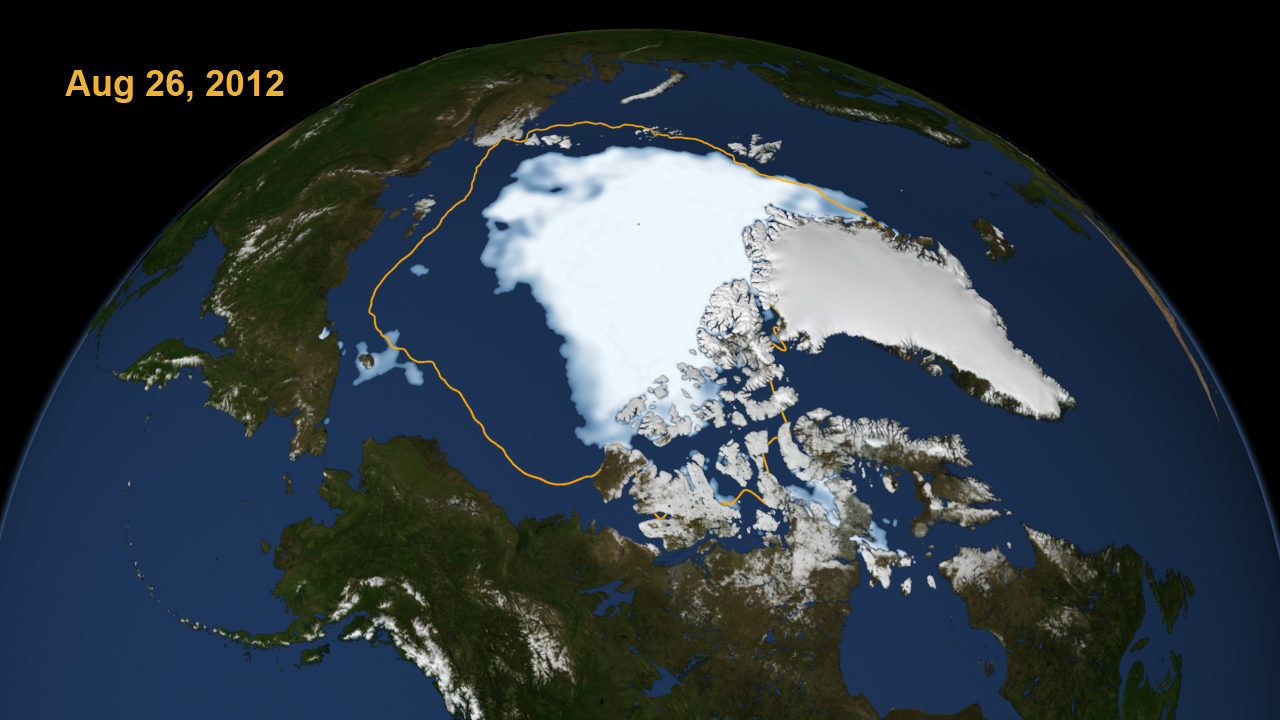
Guy McPherson is rapidly gaining a reputation as Guy ‘McStinction’ as the climate scientist who is predicting near-term human extinction “beyond the 2030”s. He makes the case that Climate Collapse (CC) is upon us and that only industrial collapse could stop it. When that happens we as a species will as he says, “Go dark” as it becomes extinct. The 26 positive feedback loops (PFLs – causal chains that are self-reinforcing and increase exponentially) are many and almost all are already beyond human control. McPherson accepts that against all odds there are (currently) two positive feedbacks that we can influence. These are the ones that set all the other PFLs in motion. Broadly they are the extraction and burning of fossil fuel. The only way McPherson thinks we can reverse and stop those positive feedbacks is for industrial civilisation to collapse.
The problem is that while McPherson has the scientific credentials to understand and explain CC, he lacks these credentials when it comes to explaining the industrial civilisation that caused it. One requirement of science is that if you are postulating human action to stop an effect you need to understand the cause. Before we talk about ‘industrial society’ collapsing we need to know what it is and how to make it collapse.
McPherson has a good grasp of industrial society as that of ‘empire’ controlled by corporations. He sees industrial society ruled by those in power now using a police state and NSA to keep a hold over the people. He hoped that the Global Financial Crisis of 2008 would bring about the collapse of industrial society. But that did not happen. The big banks and big business rallied with big bailouts and bonuses from big government that then turned the big cops on Occupy. Far from collapsing, the monopoly capitalist state then embarked on a crash program to extract and burn all known fossil fuels to boost profits. What will it take to build a citizens crash program to stop the corporate crash program turning the planet into a ball of fire? McPherson’s response to this is the need for ‘total revolution’, ‘anarchy’ and ‘freedom’ but he has no road map for how this can be made possible. This is the main problem with Going Dark and the rest of this review is about spelling out that crash socialist program for survival.
Capitalist crisis meets Climate Catastrophe
Why didn’t the 2008 GFC bring about the collapse of industrial civilisation? The short answer is that the capitalist class did not allow it to collapse and the working class did not make it. Industry is capitalist industry owned and controlled by capitalists. They are motivated by profits which they screw out of the working class surplus-value. Capitalism is a dynamic contradiction. It develops technology to increase labor productivity to get more surplus-value out of workers. But the consequence of this is the increase in investment in the tools of production (machines etc) that cannot produce value, relative to the wages of productive workers, who do. This is the famous organic composition of capital. This sows the seeds of crisis in the form of the Tendency of the Rate of Profit to Fall (TRPF). The capitalists fight the TRPF with counter-tendencies, plundering the world for cheap resources, cutting wages, and of course inventing better machines to make labor more productive.
But inevitably the capitalists cannot screw enough surplus value out of workers to make a profit on their investment and the TRPF wins. A crisis of falling profits results leading to a fall in investment, the classic capitalist slump, and an overproduction of capital which must be devalued to restore the rate of profit. The last major slump began in the 1970s but despite devaluations of capital, particularly in the neo-liberal years, surplus capital remained. It found an outlet in speculating in existing values creating fictitious values was above true values.
The 2008 GFC was a collapse of several of these overvalued speculative markets, beginning with housing but spreading to the whole banking system. To prevent this system collapsing along with these fictitious values, the banks were bailed out by central banks which created $trillions of debt to be paid for by future generations of workers in cuts to living standards - hours, wages, pensions, conditions etc. But $trillions of fictitious values remain to be destroyed before profits recover back to their post-WW2 boom levels.
The GFC did not lead to the collapse of industrial civilisation because it was no more than a symptom of that long decline as capitalism exhausts its capacity to plunder the earth and the labor value of workers sufficient to sustain its profits. The capitalist class treated the symptom of an ailing capitalism but it has not yet been able to cure the disease – falling profits.
This explains why the ruling class is ruthlessly mining, drilling, fracking the earth, and ruthlessly spying, militarising, and repressing workers, activists and ‘terrorists’ who resist its headlong rush to destruction. It is the crisis-ridden capitalist system in extremis that accounts for the polarisation of the global population where the ruling class, with its political parties, fake social movements, and media bullshit oppress the global working class which is fighting to survive as part of the natural world that parasitic capitalism threatens to make extinct. This contradiction is becoming more extreme and can be resolved in favour of nature and humanity only by the international working class, the proletariat, overthrowing and replacing the capitalist system.
Green capitalists and socialists
McPherson’s terms, ‘anarchism’, ‘freedom’ and ‘total revolution’ are subversive concepts, but they need to be translated into revolutionary strategy and tactics to overthrow capitalism. Logically, ‘total revolution’ is the only course of action in stopping the positive feedbacks still within our control. If we succeed then survival makes ‘Freedom’ possible. But are ‘Anarchism’, ‘ecosocialism’ and even ‘Marxism’ up to the task? The first test is to reject ‘Green Capitalism’ which is both utopian and reactionary. Utopian, because capitalism cannot coexist in harmony with nature; reactionary because it limits itself to “peaceful civil disobedience” as a sort of passive-aggressive behavior; activist against the ‘corporate elite’ but pacifist against capitalism.
Who are the Green Capitalists? James Hansen calling for more nuclear power; Bill McKibben’s 350.org and anti-Keystone campaigns funded by Rockefeller and other business foundations to the tune of $10 million to stop the tar-sands and shale fracking; Climate Ground Zero and the defenders of Coal River Mountain, or Greenpeace climate activism all over the world. All assume civil disobedience can stop fossil fuel burning without overthrowing capitalism. While they ‘act out’ this passive aggression the positive feedbacks keep burning us up.
‘Total Revolution’ also means going beyond Green Socialism (or ecosocialism) which claims that socialism can be achieved by redistributing the world’s wealth and imposing sustainable growth without smashing the capitalist state and creating a centralised workers’ government. This is Green capitalism with a socialist gloss. It deludes workers into the belief that capitalists can be made to forgo their carbon burning destructive profiteering without making workers pay dearly with loss of livelihoods and loss of lives. A prominent advocate of Green Socialism is John Bellamy Foster, Professor of Sociology at the University of Oregon. Foster shares with the Green capitalists the belief that we have the time to mobilise to stop climate change by pushing for reforms.
He critiques Hansen et al for failing to see that capitalism will repress any direct action to enforce a carbon tax yet still pins his hopes on such reforms leading to the development of revolutionary consciousness. Such reforms include a carbon tax, opposition to capitalist waste and capitalist growth that does not meet real needs and so on. The problem is we do not have the time to struggle for reforms that may lead to revolution. Marxists have always argued that reforms only result when the bosses want to head off a revolution. We have to take action now to shut down oil and gas plants as well as the major industries that rely on them such as the auto and plastics industries. We also have to warn that mass direct action targeting the ruling class right to rule will bring down the spy, anti-terror state forces on activists and make it necessary to abandon the reformist road for the revolutionary road.
‘Total Revolution’ and Survival Socialism
For Marx the forces of production included nature (importantly the labor-power of workers) that was subordinated to capitalist production for profit. The capitalist exploitation of nature did at that time not pose Climate Catastrophe. Today we are faced with consequences of centuries of capitalist plunder – a blowback by nature. This is not anthropogenic but capitalogenic Climate Collapse. For thousands of years before capitalism humans had to coexist as part of nature. So it is not ‘human’ agency but capitalist agency that destroys the forces of production in its mad rush to exhaust millions of years of stored up carbon. For revolutionary Marxists capitalism is lived past its due date. A socialist revolution is long overdue to stop the massive destruction of the forces of production (nature).
Yet while socialist revolution is necessary now there can be no immediate transition to a socialist society in which newly invented technology will allow the forces of production to develop in harmony with nature allowing a reduction in labor, a conservation of energy and basic need of all met. First, the destruction of nature has to be stopped. The immediate priority will be the conservation of resources while a transition to new technology is developed along with a global plan that reorganises production on the basis of meeting the basic needs of all. For revolutionary Marxists then, ‘total Revolution’ means overthrowing capitalism and replacing it with a transitional workers government that acts to stop the carbon burning feedback loops. Only if and when that has been achieved can production be planned sustainably to meet the needs of the 7 billion earthlings.
Climate change demands a ‘total revolution’ to dump corporate capitalism. ‘Anarchism’ is not sufficient. Anarchism is premised on the petty bourgeois individual who is a creature of capitalism. The proletariat is also the creation of capitalism but it is also the progressive class within capitalism whose historic mission is to be the ‘gravedigger’ of capitalism and the builder of socialism. The proletariat needs to control and conserve its productive forces to survive as part of nature. Grass roots movements like Idle No More, trade unions and community activists etc., need to join forces as the universal struggle of the proletariat. This is class war. We need to organise democratically but act globally. This requires an international organisation – a world socialist party. We must take the power and wealth off the ruling class – take over the Banks and all the big business.. We must smash their state apparatus that indoctrinates us, spies on us and represses us.
The positive feedback revolution can stop is the capitalist exploitation of nature as the source of corporate profits. We as workers are the source of those profits. Our labor-power (along with the rest of nature) is the source of all wealth. We need to mobilise our own class power. We have to build a system of workers power to defeat the state power of the ruling class. That power has to be based on its source – our labor. We need to withdraw our labor in many strike actions that build into a General Strike that shuts down capitalist production world-wide. To hold onto this power we need to occupy the workplaces and defend them against the armed forces of the state.
All of this will mean a program for an alternative society. This will start with local strike committees and defence committees that coordinate nationally and internationally. Here the various currents of anarchism, socialism and Marxism will debate strategy and tactics to win support for the best course of action. Arising from such committees will grow councils or communes where the working people will debate political tactics and plan the production of the good and services that we need to survive. There is no guarantee that we can do this, or that it will be enough to stop Capitalist Climate Collapse. But there is no way that generation Zero will go quietly into the night. And for revolutionary Marxists there is no question that we go with a bang and not a whimper!



 Posts
Posts

