Showing posts with label Karl Marx. Show all posts

Thursday, November 10, 2016

Karl Marx: Revolutionary Scientist

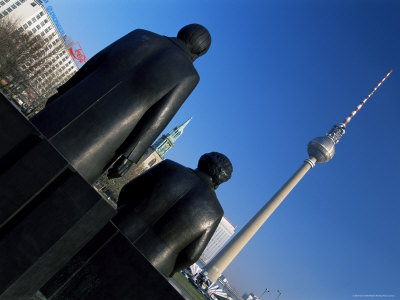
252-5635statues-of-marx-and-engels-with-tv-tower-or-fernsehturm-beyond-berlin-germany-posters.jpg
Statues of Karl Marx and Frederick Engels in Berlin


The disinterring of Marx today is now common, even if the body dug up is usually not that of Marx but imposters like Zizek who claim to be Marxists but are really academics who never organise the workers struggle. Marx had to suffer many attacks in his own lifetime and further indignities in death as Marxism was plagued by a constant stream of caricatures and misrepresentations, the most important being that Marxism was never a ‘science’ and has no relevance today.  Some even attack Marxism as a utopia that diverts us from making meaningful, incremental, progressive ‘change’.
Danylmc writing in the Dimpost blog decides after a quick skimming of Marxism that it never was scientific and moreover is counter-revolutionary because it calls for “smashing capitalism” rather than evolving through many iterations into a new, better society…or not.  For some reason Danylmc does not include the ‘labour theory of value’ (LTV) as one of Marx’s utopian ideas gone wrong. Maybe because Marx did not originate this theory as it was a fundamental plank of the political economy of his day.  Either Danylmc understands the LTV as Marx does, or not. Either way by accepting it he fails to see that it makes a mockery of his argument. [i]

So let’s see what Marx means by science. Was he copying 19th century chemistry and reducing social revolution to a law like water turning into steam at the right heat as Danylmc claims?  No, social science has to account for the interaction of conscious subjects and their material environment.   For example, humans learn over millennia how to boil water more efficiently (that is conserving labour time) a reality that the young Marx observed when as a radical journalist he campaigned for the right of landless peasants to collect firewood in the Rhineland. This experience proved that social interaction is not the random behavior of individuals because humans’ actions are ultimately determined by their social relations. And it was capitalists that burnt coal to heat water to drive their industrial revolution so as to exploit human labour power more efficiently/profitably and even enable workers to buy firewood or coal as a commodity.

So let’s go back to the make-or-break LTV.  The LTV was a theory shared by bourgeois political economy which observed the flood of peasants off the land into the factories.  Marx also began with the presupposition that humans must reproduce themselves by means of their labour. Marx was trained in philosophy and law which meant he had to test the meaning of the words he used against the social reality. What turned Marx onto the scientific analysis of society was the failure of Hegelian philosophy to account for the actions of humans as part of God’s plan. Similarly he rejected the bourgeois political economy that turned social history into a march of human progress culminating in the rise to power of the bourgeoisie.

The difference between natural and social science is that in the latter the scientist is a partisan or ‘interested’ observer. It was Marx’s taking the side of peasant wood collectors in the class struggle that converted him from a bourgeois intellectual into a proletarian intellectual.  He did this by critiquing political economy and developing the presupposition of the LTV into the Law of Value (LOV).[ii]  Political economy was empiricist and merely described value as the total labour embodied in commodities. Since this commodity production resulted from the contributions of workers, capitalists and landlords, each ‘class’ could claim a ‘fair share’ of the total labour/value as wages, profits and rents. It justified this expropriation of labour value as a reward to capital and land for the use of private property in the process of production. This empiricist rationale was elevated by Hegel into a divine mission. For Marx, it was one thing to defeat the bourgeois political and economic holy rollers in philosophical class struggle, but it would not stick unless the empiricist bourgeois political economy that justified the exploitation of labour in the process of production was blown apart by a scientific critique.

Marx’s Scientific Method

Marx’s method borrowed from Hegel in moving from concrete appearances to abstract essence and then back to the reconstituted concrete. Hegel observed the social classes, politics, state and law of German society of the early 19th century as a contradictory unity of appearances accompanying the rise of capitalism. The appearances formed a real historical society (the market lives!) but the essence which explained them was the spirit of God.  The Political economy of Smith and Ricardo also took the appearance of developing capitalism but appealed to the idealism of material progress to resolve social contradictions into the universal freedoms of bourgeois society.

Marx put Hegel on his feet and argued that the essence was not ideal but material. God and material progress were just idealist slogans used by the bourgeoisie to claim it represented the interests of all classes and nations.  In the Critique of the German Ideology, Marx and Engels settled their accounts with the followers of Hegel.  History was one of social revolutions in which successive modes of production made up of social relations of production where the ruling class extracted the surplus product of the producing class and justified it by invoking Gods.  Each mode reached its limits when the ruling class oppression of the producing class produced a rising class consciousness leading to a social revolution.  Capitalism would follow course and give rise to its successor, communism.  For the young Marx this was still a philosophical critique. The real task of proving it scientifically began. Hegelian Marxists typically arrest at this point and explain history as a ‘lawful’ transition without any conscious subjective intervention unless it is the will to power of the heroic individual!

Here we have to begin with Capital Vol 1 and read it from start to finish. It is no good relying David Harvey as a guide because he recommends leaving the ‘difficult’ Part 1 for ‘later’.  Marx deliberately started Capital with the concept of the commodity because it was the “cell” of capitalism.  His method for arriving at the essence of value was to abstract from surface appearances of equal exchange down to the commodity ‘cell’ and then move back to the surface where the appearances are now understood as the result of “many determinations”.  The class struggles on the surface now reveal their deeper causes. The commodity had a dual character, a contradictory unity of use-value and exchange value. Labour power could be exchanged for its value and at the same time create surplus value as it was the only commodity to produce more value than its own value.

How did this come about?  The primitive accumulation of pre-capitalist material wealth in the colonial world gave capitalism its kick start in Europe.  But capitalism as a mode of production did not come into full existence until commodity production was generalised by commodifying labour power of wage labour as a result of creating a class of landless labourers.  The secret, hitherto denied by political economy, was that the use-value of labour power to the capitalist was defined as its capacity to create more value that its exchange value, i.e. the wage needed to reproduce it daily.
What is scientific about this discovery?  The dual nature of the commodity allowed Marx to resolve an anomaly in political economy where labour as the equivalent of value did not exchange at its value.  It if exchanged at its value capitalism would be all wages and no profits.  Therefore political economy had to fiddle with its LTV to account for this anomaly, adding qualifications to explain why some of labour’s value ended up as profits and rent. Marx resolved this so that the LOV explained the exploitation of labour-power and expropriation of surplus-value during the process of production.

Capitalism was not an equal opportunity society of the political economists assuming unequal exchange could be corrected. Capitalism was inherently unequal and would develop in a contradictory way until it could no longer reproduce itself giving rise to the conditions for socialism.
Marx learned from both Hegel as well as Smith and Ricardo, critiqued their errors, using a method of analysis that exposed their limitations and laid the foundations for his own science.  This was to be a scientific revolution greater than those of Copernicus, Newton, Darwin or Einstein.  From henceforth all social knowledge would have to be subjected to the rigorous methodology of the scientific method.   Social science not only incorporated natural science it had to explain the constant interaction between society and nature where social classes determine these relations within limits set by nature.

Marxism:  science or utopia in Russia?

Danylmc writes: “After the Russian Revolution the Bolsheviks were very disappointed to learn that (a) history and (b) humans didn’t work like this at all. Firstly their revolution happened in an underdeveloped, mostly agrarian economy, not an advanced economy like Marx predicted. Second, the revolution failed to spread so they were stuck with ‘Communism in one country’. Thirdly, it turns out that if you have a capitalist economy – even a very basic one like Tsarist Russia – and you take away the market and put the workers in charge of the means of production (and execute anyone trading on the black market) then instead of transforming itself into a utopia because of the scientific laws of history and the malleability of human nature, the entire economy collapses, and people in cities end up eating their own children to stay alive, and everyone who can still walk rises up and joins the capitalist counter-revolutionaries trying to overthrow you.”

This is a complete travesty of what happened in Russia. First as we have seen assumptions (a) and (b) bear no relation to Marxism.  Marx did not hold to an idealist view of capitalism following inexorable laws would arrive at a communist utopia. Rather class conscious workers must overthrow it and seize power.  He excoriated the German Social Democrats in the 1870s for thinking that capitalism would evolve peacefully into socialism by means of objective laws of progress. We have seen that Marx’s scientific method makes class struggle the driver of capitalist development. It motivates the contradiction that causes periodic crises which we can see today are now terminal since the bourgeoisie can no longer overcome these crises without the destruction of humanity and nature. Either we the workers become the gravedigger of capitalism, or capitalism buries us all.

We only know this because Marxism as a revolutionary science proves that the dual nature of the commodity contains the fundamental contradiction between use-value (nature) and exchange value (capital) that is the basis for determining what happens at the surface of capitalist society.  Class struggle over the rate of exploitation at the point of production explains class struggle at the level of the market, nation state and international relations. [iii] In Capital Vol 3 Marx shows how the LOV is the basis of other ‘laws of motion’ accounting for development of capitalist production, crises of falling profits, and the drive to expand capitalist production on a world scale. Here he sets out his theory of crisis whereby the periods of boom and bust, the concentration and centralisation of capital, and the widening income gap between capital and labour are explained. While both he and Engels anticipated many of the developments of capitalism in the 20th and 21st centuries, we have to look to the work of succeeding Marxists to see how they used his finished and unfinished work as the basis for the testing and validating of his scientific theory.

Lenin finished off Marx’s unfinished volumes in one small pamphlet entitled “Imperialism: the Highest Stage of Capitalism”. To do this he had to go back to Vol 3 and show how the state, world market and international relations were explained by the laws of motion underlying crisis and counter-crisis tendencies motivated by class struggle.  This enabled him to break with the mechanical evolutionary Marxism of the 2nd International in Europe and the Mensheviks in Russia.  The result was Bolshevism, the concrete application of Marxist revolution that made the revolution in Russia, the “weakest link in imperialism”, and which led the 3rd Communist International.

The most important breakthrough of Lenin was to recognise the need to form a proletarian party as the mechanism of uniting theory and practice to test the scientific method of Marx.  Without Marxism that penetrated the veils of capitalist exploitation revealing the essence of the fundamental contradiction contained in the commodity, then workers would lack the “consciousness” necessary to fight to overthrow capitalism and replace it with socialism. While Marx had stood as the scientific ‘authority’ against the lapses into bourgeois idealism within the ranks of the workers movements, it remained trapped in by bourgeois ideology and constantly lapsed back into class struggle over the distribution of ‘fair shares’ that did not require the overthrow of capitalism.

The result was the Bolshevik party that was as response to the extreme contradiction between European imperialism and the old Tsarist feudal regime. The party became the Marxist scientist that tested theory in practice in the “weakest link” of imperialism in Russia. The old evolutionary Marxist utopia was destroyed in theory and practice. The February Revolution that began as the strike of women textile workers threw up a bourgeois Provisional Government which was incapable of breaking from British and French imperialism. It proved this by collaborating with the Tsarist General Kornilov in a Tsarist Coup. The Bolsheviks quickly drew the conclusion that the workers must take the road to socialist revolution in the almost bloodless October insurrection.

Far from ‘disappointment ‘resulting from the Revolution it inspired world wide support from workers who rose to defend it when it was invaded and isolated by the invasion of the imperialist nations. The Bolsheviks already knew that socialism could not be built in one country, let alone a backward isolated country. The survival of the Russian revolution depended on the spread of revolution and they knew in advance what was necessary to make this happen.  They formed the Communist International to organise Bolshevik type parties, the worker scientists, in every country. Only the failure of workers to break from their ties to the bourgeoisie and its ideology of market equality to form such parties capable of leading revolutions, allowed the imperialist ruling classes to hang onto their decrepit capitalist system and condemning the revolution to degenerate into a Stalinist caricature of “communism”.

The Bolshevik Revolution still stands as the most advanced struggle of the international proletariat against the reactionary utopia of rotting, dying capitalist society.  If we look around the world today we can see the bourgeoisie “eating their own children by the million” as they fight to our death to hold onto the stolen wealth of generations of workers.  Our hope must be in the revolutionary science of Marxism, embodied in the international revolution party, capable of putting into practice the scientific program that can guide our struggle to take power and replace capitalism with socialism.

NOTES
[i] The Labour Theory of Value was the issue in Marx’s “The Modern theory of Colonisation” Chapter 25 in Capital Vol 1. Mr Peel emigrated to the Swan River (Perth, Australia today) with capital, machines and men. The men shoot through to the bush to become independent producers, so Mr Peel’s machines rust and his land lies unproductive. Never mind, Mr Peel does what any good capitalist does when he cannot profit from the exploitation of labour-power, he becomes a land agent and speculates in founder’s rent.
[ii] The LOV means that value equals the socially necessary labour time required to produce it. Socially necessary labour time equals the average time of work enabling wages to buy the average commodity basket to allow the working family to live at the average standard of living.
[iii] Vol 2 examines the circuit of capital including the transformation of value into prices in the market while holding competition constant.  Vol 3 moves to the more concrete level of competition among capitalists in the market. He had planned 3 other volumes on the State, World Trade and International Relations to return to the most complex concrete level of reality which he never completed drafting.

Sunday, April 17, 2016

Karl Marx and the myth of "fair shares"


Image result for Karl Marx and income distribution

The Panama Papers have caught the 'global rich' with their blind trusts exposed and this is supposed to tell us something, but what? Are the tax cheats just greedy parasites wanting to shirk their social responsibility of paying their 'fair share' of taxes? After all are not all citizens obliged to pay their 'fair share' to pay for the state and all its services to keep the system going?

If you think 'greed' is the problem you haven't been paying attention for the last 150 years during the rise and fall of capitalism.

Taxation is based on the myth that under capitalism everyone is equal. But some bourgeois citizens are inherently more equal than others. Most work for a living while those who own the means of production live off that work.

So inequality under capitalism has nothing to do with greed and everything to do with class. One class creates the wealth, another expropriates part of it as profit. How can that be "fair".

Marx prescribes a steep "progressive income tax" in the Communist Manifesto but does not mean that taxation has anything to do with "fairness". At best it makes the capitalist forfeit some small part of his profits in order to preserve the profit system.

That is because Marx see taxation as part of the distribution of income that results from the "unfair" class relations where one class produces and the other expropriates the wealth.

So while Marx definitely calls for "Taxing the Rich" in today's language, this is part of a program to prove to workers that it is futile to expect that capitalist exploitation can be remedied by progressive taxes.

Exposing "blind trusts" to the daylight can only help erode the blind trust that workers have in the "fairness" of capitalism.

But for that to happen workers have to fight for 'progressive' taxes and not submit to the deliberate strategy of capitalists to increase the rate of exploitation in part by paying no, or token, taxes. Technically, this means that while all taxation comes out of the value productive workers produce, the burden of taxation can influence how much goes to wages and how much goes to profits.

That is why the bosses always use their state apparatus to shift the burden of taxation from profits to wages, increasing their share of the total value produced by labour.

By resisting this strategy workers learn that tax evasion is not about bosses greed but about survival of the system itself. The bosses fear taxes as the harbinger of their own class expropriation. They are driven to hide their incomes as the rate of profit falls and risks a meltdown in the world economy.

Here is the proof that tax evasion is not about greed but about survival. When surplus capital that cannot be invested productively to create more value, capitalists have to resort to gambling on existing commodities to the point where gambling becomes more and more risky and ends up in global busts.

Stock markets plunge as profits fall and dividends evaporate. Desperate attempt to prop them up by firms and states buying up their own shares just creates more debt with no prospect of being paid off.

Money is hoarded rather than invested when interest rates are negative, and bond yields are nil. So if you are going to hoard money where better than secret offshore tax havens where the value of you money erodes less rapidly because you pay no tax?

Capitalism is collapsing as the hoarded profits created by generations of workers are now under threat of going 'poof' like a bonfire of paper. This is not going to be pretty.

So when we cheer at the exposure of tax cheating bosses we should reflect that this is only a small step in exposing the rotten, corrupt, destructive society that is capitalism today.

That is why we should take Dr Marx's prescription, that the solution to capitalist inequality cannot be the mythical "fair shares" of the tax burden but the expropriation of all the past surplus value of workers hoarded by the capitalist 'elite' that secretes its piles of wealth in offshore havens and makes ready to flee the inevitable rise of a workers revolution bent on expropriating their wealth.

Expropriation of capital will allow a socialist society to produce and distribute wealth according to the only "fair share" principle: "From each according to their ability, to each according to their need".


Wednesday, December 02, 2015

Marx and the LOV (Law of Value)

Image result for Karl Marx and Law of Value

When China’s production begins to slow down, when bank interest rates in the West are around zero, and sovereign bonds yield nothing, this signifies that trillions of QE ‘easy money’ is not being invested in production of value and the global economy is more or less stagnating and heading for a crash.


Michael Roberts has just written another good blog post with data supporting an impending world crash. Of course every trader, money guru and left wing academic is also predicting a crash, sooner or later. At some point it becomes so obvious it can’t be denied. When China’s production begins to slow down, when bank interest rates in the West are around zero, and sovereign bonds yield nothing, this signifies that trillions of QE ‘easy money’ is not being invested in production of value and the global economy is more or less stagnating and heading for a crash.

Still the marketeers want a full-on depression to write off debt in a storm of “creative destruction”. The Keynesians want an end to austerity and more state spending on jobs and wages to stimulate demand, regulate debt and encourage investment in production. But as everyone knows capitalists don’t invest money in production unless it returns a profit. Marx explained capitalist investment was based on the “price of production” (POP) which is the capitalist’s costs in machines, raw materials, labour power and at least an ‘average’ profit. If this POP is too low and profits fall, bosses go on strike, put their money in the bank and pray for a bailout. At least that’s the current situation.

This is not new. Marx was rediscovered in the 1960s by student radicals when the post-war boom came to a halt. The New Right blamed the workers (and the students, unions and reds under the bed) for yet another crisis because it looked like their wage demands were causing price inflation and squeezing profits. The Keynesians refused to blame the workers but could not bring themselves to blame capitalists except for blocking social democratic governments stopping the crisis. What they had in mind was the welfare state, not the warfare state.

All they had to do was read Marx and find out where they were wrong. The LOV states that only labour produces value. This is the basis on which human society has existed for millennia and on which capitalist production takes place. But because it does not justify profits, rents and interest, mainstream economists are in denial of the LOV. Yet without knowledge of the LOV we fail to understand the most elementary features of capitalism including its inbuilt tendency to crash and the inability of states to prevent crashes.

The state serves the interests of the capitalists by attempting to solve crises but it cannot take over the investment decisions of the private capitalists. It can help create the conditions to drive down the POP by cutting costs through depressions and wars, but since the essential component of all costs of production are that of labour (LOV again), then in the last analysis, the working class has to suffer “austerity”, and the historic destruction of past, present and future labour to restore the conditions for profitability.

Surely if workers knew of the importance of the LOV they would realise that resistance to austerity can only succeed by getting rid of capitalism. However capitalism is not transparent. Capitalism encrypts the way it exploits labour power as the ideology of the free market, where individuals exchange commodities on an equal basis. Though Marx cracked the code over 150 years ago, this knowledge has been suppressed by bourgeois intellectuals who continue to create a smokescreen of neo-classical economics, and social democrats who transmit bourgeois ideology into the working class via parliament, education and the media.

Knowledge doesn’t fall from the sky. It grows out of the earth. Marx was a scientist whose examination of the commodity ‘cell’ of capitalism revealed its contradictory dual nature. It was a ‘use-value’ to be consumed to meet needs, but only if it was exchanged on the market for its ‘exchange-value’ (the socially necessary labour time (SNLT) used to make it). Marx was not the first to discover that labour was the source of value any more than he discovered economic classes. But he was the first to prove that the value of workers labour time measured by the commodities they consumed was less than the total value of the commodities they produced. The difference was surplus-value realised as profits.

The LOV became much less obvious with the rise of capitalism because capitalists accumulated their capital by dispossessing producers of their land and means of production. They could then force landless labourers to sell their labour power and expropriate the surplus-value produced as profit. When labour power is sold as a commodity it is paid its exchange-value, capitalists claim the surplus-value as their profit for investing money in production, just as landowners and bankers claim rent and interest. The commodity then ‘appears’ to be the source of value and not the labour power that created it. Marx dispelled this ‘appearance’ of capitalism posing as a ‘Holy Trinity’ of land, labour and capital, by ex-posing the origin of profits, rents and interest in the surplus-value appropriated by capital from labour in production.

However, if you reject the LOV, as non-Marxists do, then you fetishize the ‘Holy Trinity’ of market shares and cannot account for crises of production except by blaming workers for demanding high wages, or economic policy for failing to boost demand. Let’s take the case of Steve Keen, a radical post-Keynesian who rejects the LOV as “mysticism” because ‘value’ is not observable. This amounts to a retreat to market price rather than value and the ‘Holy Trinity’ formula as measure of income distribution. Keen follows Minsky arguing that excessive debt creates instability deterring capitalists from investing in production. He rejects both Keynesian ‘under-consumption’ and Marxist LTRPF explanations for that of banks creating too much money. The solution is to mobilise workers to vote for governments that will prevent private debt from rising too far. This must fail because Keen makes the fundamental mistake of separating banks industry. He sees excessive debt as the disease rather than the symptom of falling profits.

Debt is the normal basis for investment in production. What makes debt ‘excessive’ is insufficient profit to meet debt repayments. In other words debt is a claim on profits. Keen’s rejection of the LOV accounts for his focus on money rather than value. Marx shows how the LOV contains the contradiction between use-value and exchange-value that leads to the Tendency of the Rate of Profit to Fall (TRPF). Workers resistance to increased exploitation (because the exchange value of their labour power will not allow them to buy and consume enough use-values to survive) forces the capitalists to continually replace their labour with better machines.

However machines do not create value they merely pass on the labour value already contained in them as they are used up in production. This means that capitalists have to continually increase the rate of exploitation of those still in work to produce enough surplus value to return a profit on the rising investment in machines. When workers succeed in resisting a rising rate of exploitation to pay for increasingly expensive machines, the TRPF causes a fall in profits.

At this point crisis sets in and rising debt represents capital that is not productively employed which must then speculate in existing assets driving up their price well beyond their value. Such investments are called ‘fictitious’ because they cannot be exchanged for value. As speculative bubbles grow banks create more money to fuel the boom. Thus excessive credit is an effect of the TRPF. So neither Keynes solution of pumping up demand to induce capitalists to invest to meet new demand, nor Keens solution of using state regulation to stop banksters creating mountains of debt, can prevent crises because they are both effects of the fundamental cause, the LOV and the TRPF which is inherent in the social relations of capital.

If as Marxists claim the LOV means that crises occur because capitalists cannot extract enough surplus value from wage labour to make a sufficient profit, then capital is to blame for crises not labour. If you reject the LOV you cannot explain why reforms do not work. You resort to genes (human nature) or dreams (Corbynomics). Without Marx and the LOV there is no scientific theory that explains why crises cannot be resolved except at the expense of workers, which is why the proletariat has to rise up and overthrow the capitalist class that exploits them. Anything less brings us closer to the inevitable crash into social and environmental oblivion. For the proletariat to live capitalism must die!

See more at: http://thedailyblog.co.nz/2015/11/03/guest-blog-comrade-dave-brownz-marx-and-the-lov-law-of-value/#sthash.ZZeE3m0j.dpuf

Sunday, June 29, 2014

The Moral Statistics of Thomas Picketty


Picketty’s ideas in their C19th form were demolished by Karl Marx himself. But Picketty couldn’t be bothered reading Marx so he wouldn’t know this. Had he bothered he would have discovered that capitalist inequality is inherent in the fact that the class that owns the means of production forces the other class that is dispossessed of those means of production to produce surplus-value as the basis of profits. The distribution of income that results is a mere symptom of these unequal relations of production. 

We will leave Picketty’s data and the conclusions he draws from this date to the criticism of the bourgeois mice (an in- joke reference to the Young Marx – Picketty could start with Early Writings which are much less ‘boring’ than Capital). Anyone can prove that capitalism creates income inequality. The point is whether inequality is good or bad. The only thing that separates Picketty from Ann Rand is not statistics but morality.
Picketty thinks it is bad because the widening income gap is accompanied by increasing profitability. Those bosses are truly bloody minded bastards. Marx had anticipated this mistake because it was common in his day. Marx refers to a fixation on the symptoms rather than causes of inequality as “The Trinity Formula” as in the father, son and Holy Ghost.
This semi-religious fetishism of appearances has its materialist roots in the alienation of human labour as the value of the commodity which is explained in the first part of Capital Vol 1. This is the best rendition of the adage that we know the price of everything but the value of nothing.
Ironically, it was the French translation of Capital that Marx thought the best since he had the chance to edit it and since it was serialised and thus accessible to the ordinary worker (and even the odd bourgeois intellectual). Even so Marx had misgivings that the French reader would be impatient to pass quickly from the difficult analysis to “immediate questions that aroused their passions”.
Picketty has the disadvantage of writing a 600 page book that instead of illuminating the causes of inequality, buries the truth under a false theory. He whips up a moral outrage because the bosses profits rise at the expense of falling wages. 
Marxist economist Michael Roberts shows that Picketty measures profits to include ‘wealth’ as in property and housing values. Such ‘wealth’ is not counted in profits as by and large it does not directly contribute to production. Land is a source of rent (or interest on housing assets) which is deducted from wages or profits. But even using Picketty’s measure of wealth to include land, Roberts argues that this has been declining as land becomes less valuable in relation to financial assets, also increasingly unrelated to the production of profits. Perhaps Picketty should have read Marx on ‘fictitious capital’.
So Picketty’s moral statistics leads to rising profits and a falling share of wages where the political solution that presents itself is a moral condemnation of capitalism, combined with a practical push for the poor to rise up and demand their ‘fair share’ of income, even though their production of profits was never fair.
In Aotearoa/New Zealand a strong advocate for a redistribution of wealth is Gareth Morgan, a maverick entrepreneur capitalist. His method is a Universal Basic Income (UBI) paid for by what is effectively a new 25% flat tax on wealth including assets and income.  See his book TheBig Kahuna
However writing an academic text of 600 pages over a number of years means Picketty doesn't have the excuse of passion which leads him to condemn Capitalism or French impatience like the German moral socialists that Marx excoriated in the Critique of the Gotha Program for forgetting that capitalism leads to falling profits and that any equalising of income requires a socialist revolution. His language is bourgeois morality and statistics.
So like all those who think that climate catastrophe can be managed by the ‘adaptation’ of capitalism, Picketty may “throw statistics" at capitalism but doesn’t entertain the idea of overthrowing it.