Showing posts with label survival socialism. Show all posts
Showing posts with label survival socialism. Show all posts
Monday, June 17, 2019


Wednesday, December 13, 2017
Wednesday, August 23, 2017
Trump Plays with Fire in Korea
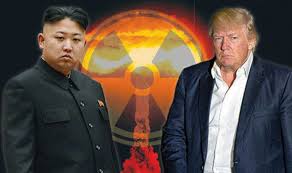
Trump is reviving Bush junior’s bellicose approach to the DPRK which carries great risks for the whole world.
By revving up the ‘axis of evil’ scenario Trump risks global destruction for the sake of what: tourism? In his bizarre phone conversation with the Governor of Guam he boasts that the publicity will boost Guam’s hotel occupancy to 110%, and that anyway Trump backs Guam 1000%. A fat lot of comfort that will give to the citizens of Guam many of whom see themselves as ‘pawns’ in the US global game of chess.
China, according an Editorial in the the semi-official Global Times, sees the war of words between Trump and Kim Jong-un as a “Reckless Game”. It states what is likely to be the official China line.
"The US and North Korea have both ramped up their threatening rhetoric. The Pentagon has prepared plans for B-1B strategic bombers to make preemptive strikes on North Korea’s missile sites. US Secretary of Defense James Mattis issued an ultimatum to North Korea on Wednesday to “cease any consideration of actions that would lead to the end of its regime and destruction of its people. Meanwhile, North Korea issued plans to fire four intermediate-range missiles to land 30-40 kilometers from Guam and claimed it would finalize the plan by mid-August."
If these threats are acted on that would seriously escalate the war of words in a shooting match. China would likely not intervene at this level but promises to do so if there is any attempt to invade the DPRK by the US and the ROK.
"China should also make clear that if North Korea launches missiles that threaten US soil first and the US retaliates, China will stay neutral. If the US and South Korea carry out strikes and try to overthrow the North Korean regime and change the political pattern of the Korean Peninsula, China will prevent them from doing so."
The prospect of a hot war between China and the US over Korea is dangerous for everyone in the region including New Zealand. It would risk escalation into nuclear war and that war becoming the dreaded WW3. China is currently trying to persuade both Trump and Kim Jong-un to back off. But it could not sit back while the DPRK is directly attacked or invaded. So why is Trump trumping the most belligerent of US Presidents George Bush in the level of threats made against the DPRK?
Is Trump such a maverick that he can’t tell the difference between what is good for business and what is good for humanity? Even ‘casino Capitalism’ requires punters. Clearly there is room for moderating the Bush bellicosity in the direction of Clinton’s negotiated deals on nuclear proliferation. Clinton knew that the DPRK regime was an anachronism, a failed state, and not some threat to US interests. Obama continued this policy recognising that the DPRK was a small fish in its own tank compared with an expansive China. So is this crisis down to Trump’s personality, the back-to-the-Great-USA fundamentalism of his militant support base pushing Trump into war, or is there something deeper driving this?
The global forces that are behind this crisis are those of a renewed rivalry between the declining US imperialist bloc, and the rising China/Russia imperialist bloc. The US has dominated the Pacific since the end of WW2. It defeated Japan and established its allies and bases in the region including the armistice on the 38th parallel in Korea separating the ROK and DPRK. But the US failed to stop the Chinese revolution and having worked hard since Nixon went to China in 1974 to restore capitalism and destroy “communism” eventually got its wish but was unable to reap the prize – a servile client state to inject some life into the US economy.
Instead of succumbing as new colonies of Western imperialism with the end of the cold war, both China and Russia as former ‘workers’ states’, used their state controlled economies to deny the West their prize of conquest. Both opened up to the West but more or less on their own terms. Western investment was quarantined within these state capitalist regimes to benefit the ‘red’ capitalists. Today, both are emerging as rivals to the declining US imperialism. And as is always the case with declining capitalist powers they cannot compete economically so they do so militarily. But today, the US is no longer the ‘hegemonic’ global power facing China’s economic dominance and Russia’s military technology.
So Trump’s foreign policy in Asia, while adventurous, is an inevitable expression of this rise and fall of great powers. Korea is one of a number of flash points around the world between the two imperialist blocs where the US faces the rising influence of China/Russia including Ukraine, Syria, the South China Sea. All these flash points are evidence that the rivalry between the old and new imperialist powers explains what is going on in the world.
More importantly, all these imperialist powers are facing a global, terminal crisis as the global system stagnates. While they are competing in Europe, the Middle East and Asia with economic and political sanctions, and fighting proxy wars, facing termination, these wars must escalate into regional and ultimately global extermination. So what we are seeing in Korea today is the prospect of a cold war on words that spreads to hot wars between nuclear powers.
It is not in the interests of any power to go to world war as it would destroy not only the enemy but any economic base for survival of the human species. The problem is that such wars can start by accident, or by crazy “Dr Strangelove” actors who push the wrong button. So what can we do to try to stop such a catastrophe?
For a start we should tell our NACT regime not to follow the Australian example of unconditional support for Trump. NZ is a semi-colony of the US AND China. Politically our ruling class it is client of the US, economically it is a client of China. Both are imperialist powers which exploit the NZ economy at the expense of NZ workers. We must be against the intervention of both (all) powers on the Korean Peninsular and refuse to support any request to side with one or other. Not because NZ has an international reputation for peacekeeping which is a lie as our intervention on Afghanistan proves. Our neutrality should be against any war in which a small power becomes a pawn in the fight between two global powers because as a semi-colony ourselves we defend the right of other semi-colonies to be independent of imperialist domination.
So our neutrality does not extend to Korea itself. We are for its self-determination which in simple language means independence from all imperialist powers. During the Korean war the left in NZ was split between the Stalinist, Maoist and Trotskyist left that defended the DPRK as having a legitimate claim to oust the US from the ROK and create a united socialist Korea. The rest of the anti-war movement had illusions in the UN armistice as creating ‘peace’ in denial of the ongoing ‘class war’ that shapes our destinies.
Today we have to take the same stand against China’s threat to intervene to defend the DPRK. This turns Korea into the site of another proxy war between imperialists over who controls Korea. Korean working people must determine their own future in a united Korea. They must be supported by the billions of working people around the world who lives are at stake can change this by organising into a global anti-imperialist movement.
This is why we urgently need a left in NZ that is anti-imperialist through and through rather than pacifist with illusions in the UN. That is the only way to unite workers in both Koreas, China, the US and the rest of the Pacific, against the imperialist regimes and their client regimes that a pushing for war and risking global catastrophe. In playing with fire in Korea Trump is playing with all of our lives. To survive we need Survival Socialism.
Sunday, December 01, 2013
Nuclear Power won’t stop Climate Collapse
Prominent climate change pioneer James Hansen and a number of other environmentalists including Guardian journalist George Monbiot are now publicly advocating new nuclear power generation as the only viable solution to burning carbon. Yet we literally do not have the time to debate the cost-effectiveness of Nuclear energy 60 even 20 years ahead. Climate collapse will have turned nuclear plants into nuclear disasters by then. We should be shutting down nuclear plants now if we are to survive as a civilisation. Environmentalists and reformist politicians who think that capitalism can find a nuclear fix to climate change delude themselves and attempt to delude the masses. The evidence is clear that nuclear energy is potentially as destructive of nature and society than burning carbon. The sun is the only nuclear plant which socialists should advocate as the source of our energy.
Capitalists produce for profit no matter what the expense in terms of social and environmental damage. Any social progress under capitalism is due to working class struggle. That is why socialists never put their trust in capitalist solutions to social and environmental problems. The current structural crisis of capitalism is creating worsening global instability and threat of inter-imperialist war. In wars nuclear reactors are vulnerable to damage and destruction. Israel has bombed Syrian and Iraqi nuclear facilities and continues to threaten to destroy Iran’s nuclear facilities. Moreover the major imperialist powers have nuclear powered fleets which if involved in military hostilities would endanger their reactors. Even without war there is a long list of nuclear accidents and release of radiation. All this is the living proof that as capitalism nears the end of its existence it intensifies its destruction of the forces of production. Today this has taken a dramatic turn. The destruction of the forces of production today is fused into the global destruction of anthropogenic climate catastrophe and the threat of human extinction.
Risk is real, not hypothetical or alarmist
Nuclear plants are too risky, too expensive, too insecure and too slow to build in the time left us. The danger of nuclear meltdown is top of the list. Fukushima and TEPCO are evidence of the negligent design and operation of nuclear power plants. Far from rescuing capitalism from climate change there is the 'potential' for nuclear meltdowns due to climate collapse. Both Chernobyl and Fukushima were Level 7 (highest known) meltdowns caused by human failure. Chernobyl involved operator error compounded by design deficiencies and inadequate operating instructions. Fukushima was built on a fault line, without adequate protection from a tsunami, and also had major design deficiencies. Climate collapse adds much greater risks of ‘accidents’ as an exponential increase in extreme weather events that will render many existing plants vulnerable to flooding. This is why nuclear plants should be closed down now before they are inundated by storms and floods and no new ones built by big nuclear subsidised by the dominant imperialist states.
The standard rejoinder of nuclear advocates is that the risk of nuclear meltdowns and resulting harm is vastly overstated by anti-nuclear campaigners. Or at least, as Hansen et al argue, these known dangers are much less than that of carbon induced global warming. The official method of measuring radiation poisoning originates from methods of measuring doses of radiation from nuclear weapons. But obviously there are also longer term environmental and health effects. There are huge differences in which measures one uses. Monbiot, for example, quotes from the UN agency Unscear for his numbers of 43 dead from Chernobyl, while Caldicott and others think this agency covers up and lies about the true extent of health effects and quotes the NY Academy of Sciences review of a mass of epidemiological research. More important than Chernobyl as an indicator of future risk from climate change are the measurable effects of the Fukushima meltdown because they simulate the extreme weather conditions associated with climate collapse.
We have already seen nuclear plants flooded in the US. In 1992 Hurricane Andrew caused major damage to the Turkey Point plant in Florida. Fort Calhoun in Nebraska was shut down because of flooding in July 2011 and remains shutdown. Nuclear whistleblowers in the US claim that there no adequate preparation for upstream dam failures facing many plants. During Hurricane Sandy more than a dozen plants on the eastern seaboard were threatened and the oldest nuclear plant in the US, Oyster Creek in New Jersey, was shut down as flood water came within two feet of its backup diesel cooling system. Since Fukushima, US nuclear plants have been subjected to inspections and found wanting, the worst being at Monticello, Minnesota.
In Britain, unpublished government analysis shows sites are at risk from flooding due to climate change. [see Sizewell graphic].In Europe heat waves have caused problems with nuclear plants that have to be shut down. In 2003 and 2006 and 2011 heatwaves forced the shutdown or reduction in production of nuclear plants in France, Spain and Germany. In the US the 2012 heatwave forced the shutdown of one reactor at the Millstone nuclear plant in Connecticut. Inside Climate News reports on the many instances in the US and Europe where heat and drought have interrupted production of nuclear power. So, climate change is already bringing extreme weather events such as droughts and flooding that are testing the poor design and safety of existing nuclear plants.
Fukushima Daiichi warns of nuclear Armageddon
The disaster at Fukushima has altered the debate dramatically. Here we have a combination of design defects and administrative blunders combining with a natural disaster – an 8.9 earthquake and a massive tsunami. Here is the ‘perfect storm’ that simulates what many argue will be the future natural disasters compounded by extreme climate change. Fukushima has activated both sides of the debate, but now ramped up many decibels in response to the potential extreme threat.
On the pro-nuclear side Fukushima supports the need for a nuclear future. A Forbes writer claims that the radiation leaks from Fukushima are no worse than eating bananas. In any case like Hansen et al, the writer claims the risks of Fukushima leakages are far less than continued carbon burning. He states that the German decision to close the nuclear stations means much greater reliance on damaging brown coal burning plants. He concludes:
“The point being that Fukushima went through absolutely the worst natural disaster that the world could throw at a nuclear plant: and yes, that plant was wrecked but wrecking the plant hasn’t killed anyone and won’t do. The amazing thing about nuclear power is not how dangerous it is but how safe it is. And given that we do indeed need to have some power if we’re to keep this civilisation thing on the road, given that renewables simply cannot scale up in time, we’re going to have to replace some of our fossil fuel fired generating capacity with more nuclear. Which is exactly what Hansen et al are pointing out.”
The anti-Nuclear side point out that the real threat has not yet been revealed. While the effects of Chernobyl forced the authorities to disclose what caused the disaster and today the real extent of the environmental and health damage is seriously documented, in Fukushima we still have a lot of political and corporate secrecy and denial. Koide Hiroaki is a nuclear engineer and one time advocate of nuclear power who now wants these plants closed down. A long-time critic of nuclear energy, after March 11, 2011 he is now seen as a sort of official nuclear ‘whistleblower’ in Japan. Not only has Koide exposed the safety defects of nuclear plants, he links this fact to the secretive corporate state regime that disregards public safety. His message is clear, the plant’s containment systems were destroyed by the earthquake and tsunami and the leaking of radiation continues and is not under control. Existing levels of emissions are much worse than consuming bananas and future emissions and their health effects are as yet unknown. The latest information on emissions is very scary. There is an excellent coverage of Fukushima by Japan Focus.
It is clear that far from convincing us that Fukushima has survived the worst that even global warming can throw at us proving the viability of a nuclear future, on the contrary, the ongoing disaster at Fukushima is putting the future of nuclear power generation in doubt. Japan is proving that once the real human costs of nuclear disasters become known, public opinion is mobilised and far from settling for more carbon burning as envisaged by the Abe Government, it can become the decisive factor in the rapid growth of renewables. What the pro-nuclear lobby fails to recognise is that public pressure in Japan, Germany and other countries is now making possible the viability of energy renewables to replace coal, oil and gas plants.
Renewables come cheaper and faster
At the same time as downplaying the risk of nuclear disasters the pro-nuclear advocates underestimate the viability of renewables such as solar, wind and biomass based on increased cost efficiency even without the nuclear industries massive state subsidies. Renewables are already competing with nuclear and increasing their share and do not take 10 years or more to construct. Moreover the multibillions needed for new nuclear plants takes money away from the rapid expansion of renewables.
In a comment to NY Times article on the call in the Hansen et al Open Letter for nuclear power as an alternative to burning carbon, Amory B. Lovins from the Rocky Mountain Institute wrote:
"There's an important missing point here: Building new nuclear power plants would reduce and retard the climate protection that Drs. Hansen et al. (and I) want. Why? Because new nuclear power plants (of any kind) are so costly and slow to build that they'd save ~3-20x less carbon per dollar and ~20-40x less carbon per year than investing the same money in efficiency, cogeneration, and modern renewables. This unavoidable conclusion from these technologies' empirically observed market prices and deployment speeds was summarized in 2009. I wonder if Drs. Hansen et al. would please enlighten us about exactly why they believe renewables cannot scale fast enough. The empirical data show that non-hydro renewables are adding 80+ GW/y, have already added more capacity in less than a decade than nuclear power has achieved in a half-century, and are attracting a quarter-trillion dollars of private capital per year. Nuclear energy is losing capacity (and was even before Fukushima), will soon fall behind nonhydro renewables in output as it already has in capacity (even China's nuclear power was outgenerated last year by its windpower), and is unfinanceable in the capital markets.
More fundamentally, non-hydro renewables are scalable, mass-producible manufactured products. They're exploiting the economies of mass production and fast marketwide installation that for nuclear power are a remote hope—and unrealistic due to poor economics. It's strange to tout new reactors when the US has terminated 14 operating or planned ones this year alone because just their operating cost can't compete. If the concern is the supposed challenges of grid integration, I'd invite the authors to explain why Germany and Denmark (with 23% and 41% renewable electricity in 2012) have Europe's most reliable electricity, and how the lights stay on in Spain (48% in the first half of 2013) and Portugal (70%), all without new bulk storage. Of course, the cheapest and fastest options are on the demand side. U.S. weather-adjusted electricity use per dollar of real GDP fell 3.4% last year alone, and we're barely scratching the surface of profitable efficiency.”
Workers Power!
The capitalist market is already showing that energy renewables are cheaper, more efficient and practicable as the alternative to burning carbon for energy. But state monopoly capitalism is facing a terminal crisis of falling profits. To keep the oil fuelled global capitalist economy going big oil and big nuclear are pushing coal, oil, gas and nuclear rather than energy renewables. To keep the capitalist system alive they will fight a dirty class war to dig, drill and frack the remaining stockpile of carbon or power up nuclear fission and turn the world into a ball of fire.
Climate scientists are now coming to the view that climate catastrophe is unstoppable. We therefore face a very stark choice of capitalism in all of its destructive drive to survive, or socialist revolution for humanity to survive. Facing capitalist crisis and climate meltdown the working class needs a political program that can meet its needs. To have a chance of surviving we have to get rid of capitalism and create a socialist society! We put forward a program of Transitional Demands for urgent debate among the world’s workers:
- Basic demands for decent jobs, wages, houses, transport, health, education, social security etc all pose the urgent necessity for workers to self-organise their own class power!
- We demand the immediate closing down of coal and gas plants through worker occupations of big oil and its operations.
- We must demand the transfer of the multi-billion state subsidies to big nuclear be spent instead on rapidly expanding solar and other renewables to reach zero carbon by 2030.
- We demand a crash program of public works in renewables to meet climate collapse 20-40 years into the future and to put the industries under workers control and administration. Energy production must be socialised under the democratic control of the working people!
Subscribe to:
Posts (Atom)

 Posts
Posts

